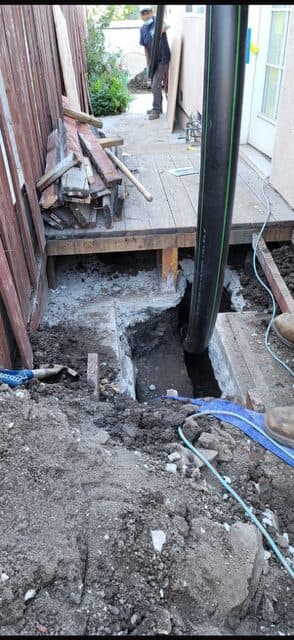
Trenchless sewer repair is a way to restore or replace a damaged sewer line without digging one long open trench across the property. Instead of removing the entire pipe from above, trenchless methods use small access points, specialized equipment, sewer cameras, and lining or replacement systems to fix the pipe from the inside.
For many West LA, Beach Cities, and South Bay properties, that can make a major difference. Sewer lines often run under driveways, patios, landscaping, apartment courtyards, commercial hardscape, or finished tenant areas. Traditional excavation may still be necessary in some cases, but trenchless repair can often reduce disruption, shorten the work area, and preserve more of the property.
How trenchless sewer repair works
The process usually starts with a sewer camera inspection. A camera is sent through the line to locate cracks, root intrusion, corrosion, offsets, bellies, blockages, and collapsed sections. That inspection determines whether the pipe can be rehabilitated or whether a section needs to be replaced.
The most common trenchless options include:
- CIPP pipe lining, where a resin-saturated liner is installed inside the existing pipe and cured into a new pipe wall
- Spot repairs, where a shorter damaged section is repaired without replacing the whole line
- Pipe bursting, where a new pipe is pulled through while the old pipe is fractured outward
- Targeted access-point repairs, where limited excavation is used only where the pipe is too damaged for lining
The right method depends on the condition of the pipe, the material, the access points, the slope, and the reason the line is failing.
When trenchless repair is a good fit
Trenchless sewer repair is often a good option when the existing pipe still has enough shape and structure to support rehabilitation. It is commonly used for cracked clay pipe, root intrusion, aging cast iron, minor separations, corrosion, and recurring sewer backups caused by structural defects.
It can be especially useful for:
- Homes with sewer laterals under driveways, landscaping, or patios
- Apartment buildings with recurring mainline problems
- Commercial properties where downtime affects tenants or customers
- Real estate transactions where a sewer issue needs a clear repair plan
- Properties where excavation would damage expensive hardscape
When trenchless repair may not be enough
Trenchless repair is not the right answer for every sewer line. If the pipe is fully collapsed, severely misaligned, improperly sloped, or has major low spots holding water, open-cut replacement may be the better long-term fix.
That is why camera verification matters. A good contractor should not recommend pipe lining or pipe bursting without first understanding what is actually happening inside the line.
Trenchless vs traditional sewer replacement
Traditional sewer replacement usually means digging down to the pipe, removing the failed section, and installing new pipe. That can be the strongest option when the line is badly damaged or poorly graded.
Trenchless sewer repair, by contrast, is designed to reduce excavation. The goal is to restore function and structure while keeping the property intact where possible. The best choice is not always the least invasive one. It is the method that solves the actual problem without creating unnecessary damage.
What property owners should expect
A professional trenchless repair plan should include:
- A sewer camera inspection
- A clear explanation of the pipe condition
- A recommendation based on the footage
- Pricing for the appropriate method
- Before-and-after camera verification
For WTS Construction clients, the goal is simple: diagnose the line clearly, explain the available options, and recommend the method that makes the most sense for the property.
Learn more about trenchless sewer repair, CIPP pipe lining, underground sewer and drain repair, and where we work.
Frequently asked questions
- Is trenchless sewer repair permanent?
- A properly installed trenchless repair can be a long-term sewer rehabilitation solution, but the life of the repair depends on the pipe condition, installation quality, material, and site conditions. The first step is always a proper inspection.
- Is trenchless repair cheaper than digging?
- Sometimes. The pipe repair itself may not always be cheaper, but trenchless methods can reduce the cost of replacing hardscape, landscaping, concrete, or tenant improvements after excavation.
- Can you line cast iron sewer pipe?
- In many cases, yes, but the cast iron needs to be cleaned, inspected, and evaluated first. If the pipe has lost too much structure, replacement may be a better option.
- Do I need a sewer camera inspection first?
- Yes. A camera inspection is the only way to see whether the pipe is a good candidate for lining, spot repair, pipe bursting, or replacement.