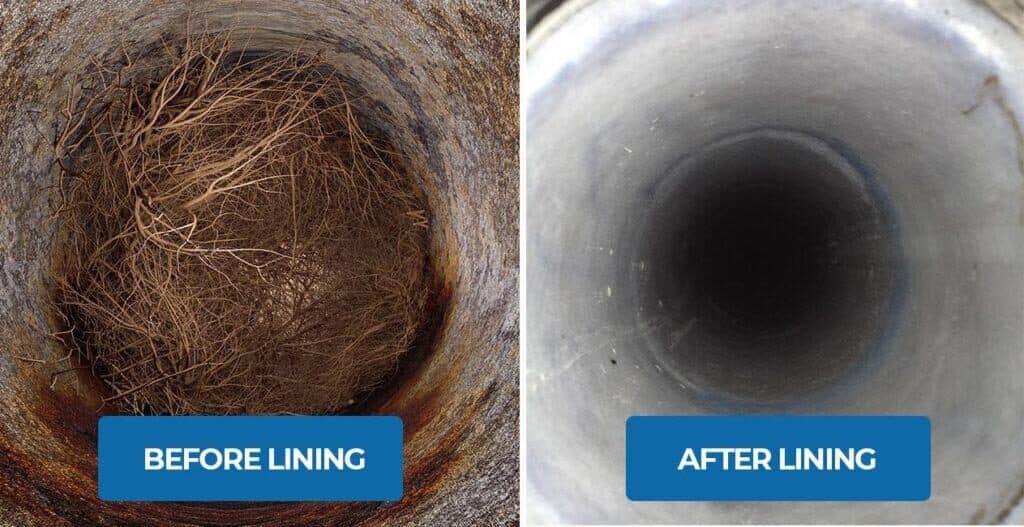
When a sewer line fails, property owners usually want two things: a repair that lasts and a process that does not destroy the property. That is where the choice between CIPP pipe lining and traditional sewer replacement matters.
Both methods can solve serious sewer problems. The right answer depends on the pipe condition, the location of the damage, the amount of access available, and whether the line still has enough structure to be rehabilitated from the inside.
What is CIPP pipe lining?
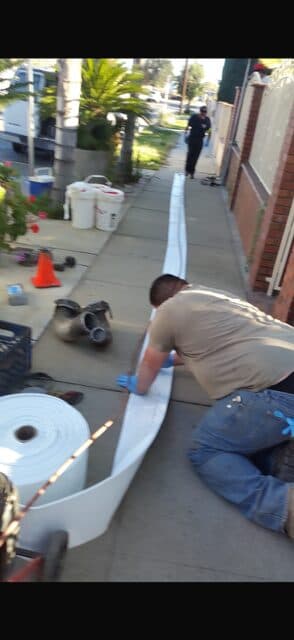
CIPP stands for cured-in-place pipe. It is a trenchless rehabilitation method where a flexible liner is saturated with resin, inserted into the existing pipe, expanded against the inside wall, and cured until it hardens. Once cured, the liner forms a new pipe inside the old pipe.
CIPP is commonly used to address:
- Root intrusion
- Cracks
- Corrosion
- Small gaps or separations
- Aging cast iron or clay pipe
- Recurring backups caused by rough or damaged pipe walls
Because the work happens mostly from inside the pipe, CIPP can often avoid major excavation.
What is traditional sewer replacement?
Traditional replacement means excavating down to the sewer line, removing the damaged pipe, and installing new pipe. It is more invasive, but it is sometimes the correct solution.
Traditional replacement may be necessary when:
- The pipe is collapsed
- The line has major grade or slope problems
- There are severe offsets
- The pipe is too deteriorated to line
- A belly in the line is holding water
- Access for trenchless equipment is not practical
A good sewer contractor should be willing to recommend excavation when the pipe condition calls for it.
Which option is less disruptive?
CIPP pipe lining is usually less disruptive because it avoids digging a full trench. That can be especially valuable when the sewer line runs under a driveway, patio, apartment courtyard, commercial walkway, or landscaped area.
Traditional replacement can involve more surface damage and restoration. That does not make it a bad option. It just means the total project includes both the pipe work and the restoration work afterward.
Which option lasts longer?
Both can be long-term solutions when installed properly and used in the right situation. The bigger issue is whether the method matches the actual defect.
A lined pipe can perform well when the host pipe is a good candidate. A newly replaced pipe can perform well when installed with proper slope, bedding, and connections. Problems happen when a method is used in the wrong situation, such as lining a pipe with a severe belly or replacing a pipe without correcting the underlying grade issue.
Which one costs more?
There is no universal answer. CIPP may reduce restoration costs because there is less digging. Traditional replacement may have a lower pipe-work cost in some situations but a higher total project cost once concrete, landscaping, or tenant disruption is included.
The only useful estimate is one based on the actual line. That means camera footage, measurements, access points, pipe material, and a clear repair scope.
How WTS Construction evaluates the line
Before recommending CIPP or replacement, WTS Construction looks at the line with a sewer camera and evaluates:
- Pipe material
- Length of damage
- Root intrusion
- Corrosion or scale
- Slope and standing water
- Access points
- Surface conditions above the line
- Whether the property is residential, multifamily, or commercial
The goal is not to sell the most expensive option. The goal is to recommend the repair that solves the problem and makes sense for the property.
Compare CIPP pipe lining, trenchless sewer repair, underground sewer and drain repair, and sewer camera inspection for your property.
Frequently asked questions
- Is CIPP pipe lining always better than digging?
- No. CIPP is a strong option when the pipe is a good candidate, but collapsed, badly misaligned, or improperly sloped lines may need excavation.
- Can CIPP fix root intrusion?
- Yes, CIPP can seal many root-entry points after the line is cleaned and prepared. The pipe still needs to be inspected first to confirm it is suitable.
- Will pipe lining reduce the inside diameter of the pipe?
- The liner does slightly reduce the inside diameter, but it also creates a smoother pipe wall. For many sewer lines, the improved flow surface offsets the small diameter change.
- Should I get a sewer inspection before buying a property?
- Yes. A sewer inspection can reveal expensive problems before closing and help buyers, sellers, and agents understand whether a repair is needed.